Control Moment Gyroscopes

14 Control Moment Gyroscopes for Space Applications from 5 manufacturers listed on SatNow

Control Moment Gyroscopes (CMGs) are spacecraft attitude control actuators that generate control torque through the conservation of angular momentum. Control Moment Gyroscopes for space applications from multiple manufacturers are listed on SATNow. Use the filters to select products based on your requirement. View product details, download datasheets, compare products, get quotes and pricing for matching products. SATNow has compiled this list of products specifically for Space and Satellite Applications.

14 Control Moment Gyroscopes from 5 Manufacturers
14 Products from 5 Manufacturers
Description:Control Moment Gyroscope for CubeSats

Product Specs

Mass:
13 Kg
Momentum:
8 Nms
Torque:
8 Nm
Gimbal Axis Angular Range:
Unlimited
Gimbal Maneuver:
2 Million
Supply Voltage:
22 to 36 V
Power Consumption:
25 to 30 W
Interface:
RS-422
more info
Description:25-75 Nms Spacecraft Control Moment Gyroscope

Product Specs

Mass:
28 Kg
Momentum:
25 to 75 Nms, ± 4% (Tolerance)
Torque:
75 Nm
Gimbal Axis Angular Range:
360 Degrees
CMG Balance:
0.6 to 15 g-cm
Tolerance:
0.04
Power Consumption:
11 to 113 W
more info
Description:Control Moment Gyroscopes for Small Satellites Applications

Product Specs

Satellite Type:
SmallSat
Mass:
3.2 Kg
Momentum:
2.8 Nms
Torque:
4.4 Nm
Supply Voltage:
22 to 34 V
Interface:
CAN, UART
more info
Description:Control Moment Gyroscope for Earth Observation and Science Missions

Product Specs

Space Heritage:
Yes
Lifetime:
10 Years (LEO)
Mass:
69 Kg
Momentum:
70 to 75 Nms
Torque:
75 Nm
Angular Resolution:
22 Bits
Gimbal Axis Angular Range:
Unlimited
Angular Momentum Stability:
0.001%
Pointing Performance:
0.1 to 2 mrad
Gimbal Maneuver:
2.8 Million
Power Consumption:
57 to 145 W
more info
Advertisement
Description:1 to 100 mNm Control Moment Gyroscope

Product Specs

Space Heritage:
Yes
Satellite Type:
SmallSat
Mass:
280 g
Momentum:
13 mNms
Torque:
1 to 100 mNm
Gimbal Axis Angular Range:
Unlimited
Gimbal Maneuver:
30 Million
Radiation Level:
24 krad
Supply Voltage:
6 to 14 V
Power Consumption:
1.92 W
Interface:
RS-485
more info
Description:12 Nms Spacecraft Control Moment Gyroscope

Product Specs

Mass:
18 Kg
Momentum:
12 Nms
Torque:
12 Nm
Gimbal Axis Angular Range:
Unlimited
Gimbal Maneuver:
2 Million
Supply Voltage:
22 to 36 V
Power Consumption:
20 to 35 W
Interface:
RS-422
more info
Description:Modular Control Moment Gyroscope for Small Satellites

Product Specs

Satellite Type:
MicroSat
Mass:
2.4 Kg
Momentum:
0.7 Nms
Torque:
1.1 Nm
Supply Voltage:
26 to 32 V
more info
Description:40-60 Nm Control Moment Gyroscope Large Satellites

Product Specs

Space Heritage:
Yes
Satellite Type:
SmallSat
Lifetime:
10 Years (LEO)
Mass:
38 Kg
Momentum:
30 to 40 Nms
Torque:
60 Nm
Angular Resolution:
22 Bits
Gimbal Axis Angular Range:
Unlimited
Pointing Performance:
1 to 10 mrad
Gimbal Maneuver:
7.3 million
Supply Voltage:
22 to 37 V
Power Consumption:
49 to 95 W
more info
Advertisement
Description:TensorCMG-4

Product Specs

Space Heritage:
Yes
Satellite Type:
CubeSat
Mass:
4.5 Kg
Momentum:
4 Nms
Torque:
10 Nm
Gimbal Axis Angular Range:
Unlimited
Gimbal Maneuver:
30 Million
Radiation Level:
24 krad
Supply Voltage:
22 to 34 V
Power Consumption:
10 to 17 W
Interface:
RS-422
more info
Description:15-45 Nm Control Moment Gyroscope for Medium Satellites

Product Specs

Space Heritage:
Yes
Satellite Type:
SmallSat
Lifetime:
10 Years (LEO)
Mass:
18.4 Kg
Momentum:
15 Nms
Torque:
45 Nm
Angular Resolution:
22 Bits
Gimbal Axis Angular Range:
Unlimited
Angular Momentum Stability:
0.0003
Pointing Performance:
10 mrad
Gimbal Maneuver:
2.4 Million
Supply Voltage:
22 to 37 V
Power Consumption:
25 W
more info
Description:1 to 100 mNm Control Moment Gyroscope

Product Specs

Space Heritage:
Yes
Satellite Type:
SmallSat
Mass:
280 g
Momentum:
13 mNms
Torque:
1 to 100 mNm
Gimbal Axis Angular Range:
Unlimited
Gimbal Maneuver:
30 Million
Radiation Level:
24 krad
Supply Voltage:
6 to 14 V
Power Consumption:
1.92 W
Interface:
RS-485
more info
Description:1000 mNms Control Moment Gyroscope

Product Specs

Space Heritage:
Yes
Satellite Type:
CubeSat
Mass:
2.5 Kg
Momentum:
1000 mNms
Torque:
3000 mNm
Gimbal Axis Angular Range:
Unlimited
Gimbal Maneuver:
30 Million
Radiation Level:
24 krad
Supply Voltage:
22 to 34 V
Power Consumption:
5 to 10 W
Interface:
RS-485, CAN
more info
Advertisement
Description:10000 mNms Control Moment Gyroscope

Product Specs

Space Heritage:
Yes
Satellite Type:
CubeSat
Mass:
12 Kg
Momentum:
10000 mNms
Torque:
30000 mNm
Gimbal Axis Angular Range:
Unlimited
Gimbal Maneuver:
30 Million
Radiation Level:
24 krad
Supply Voltage:
22 to 34 V
Power Consumption:
20 to 40 W
Interface:
RS-485, CAN
more info
Description:13 mNms Control Moment Gyroscope for Attitude Control

Product Specs

Space Heritage:
Yes
Satellite Type:
SmallSat
Lifetime:
5 Years (LEO)
Mass:
0.29 Kg
Momentum:
13 mNms
Torque:
1 to 100 mNm
Gimbal Axis Angular Range:
Unlimited
Rotor Speed:
10500 rpm
Inrush Current:
20 to 200 mA
Radiation Level:
24 krad
Supply Voltage:
3 to 8.4 V
Power Consumption:
0.2 to 5.65 W
Interface:
RS-485, UART
more info
Advertisement

What are Control Moment Gyroscopes?

Control Moment Gyroscopes (CMGs) are spacecraft attitude control actuators that generate control torque through the conservation of angular momentum. A CMG consists of a spinning rotor mounted on one or more gimbal axes. The rotor maintains a constant high angular momentum vector, and torque is produced by rotating the gimbal axis, which changes the direction of the stored momentum vector. This vector reorientation produces an output torque perpendicular to both the rotor spin axis and the gimbal rotation axis, enabling efficient and continuous attitude control without expelling propellant.
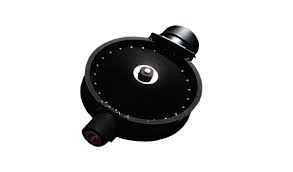
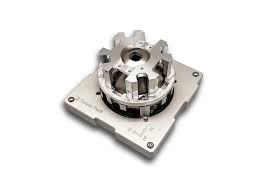
                   

In spacecraft applications, CMGs are used to achieve rapid slew maneuvers, precise pointing, and agile reorientation for payload alignment, antenna steering, and mission-critical stabilization. They are typically integrated into arrays to provide multi-axis control and singularity management. Compared to reaction wheels, CMGs can deliver significantly higher torque for a given stored momentum, making them suitable for high-mass or high-inertia satellites requiring large-angle maneuvers and dynamic pointing performance.

Key specifications of Control Moment Gyroscope

  • Satellite Type: This parameter defines the spacecraft class and mission profile for which the control moment gyroscope is designed. Satellite type is impacted by structural integration constraints, duty cycles, redundancy architecture, environmental qualification levels, and control law implementation. The operational regime, including agility requirements and disturbance environments, directly affects CMG sizing, configuration, and fault-tolerance strategy.
  • Mass: The mass of the control moment gyroscope affects spacecraft mass budgeting, structural support design, and overall inertia distribution. CMG mass contributes to the spacecraft’s center of gravity and influences dynamic coupling with the bus.
  • Momentum: Momentum refers to the stored angular momentum of the spinning rotor. It determines the total angular momentum available for vector reorientation and directly affects the magnitude of achievable control torque during gimbal actuation. High momentum enables greater torque authority and larger attitude maneuvers before momentum management or unloading is required, influencing mission agility and disturbance rejection capability.
  • Torque: Output torque is generated by the rate of change of the angular momentum vector as the gimbal rotates. This parameter defines the actuator’s ability to overcome spacecraft inertia and external disturbance torques. Torque capability determines achievable slew rates, response times, and pointing stability under dynamic conditions, and must be matched to the spacecraft’s inertia tensor and mission maneuver profile.
  • Gimbal Axis Angular Range: The gimbal axis angular range specifies the mechanical rotation limits of the gimbal mechanism. This range constrains the extent to which the momentum vector can be redirected and directly impacts singularity avoidance strategies in multi-CMG arrays. Adequate angular range is essential to maintain continuous torque authority and prevent saturation during complex or large-angle maneuvers.
  • Angular Resolution: Angular resolution defines the smallest controllable increment of gimbal motion. It affects torque quantization, control smoothness, and fine-pointing performance. High resolution enables precise torque modulation and minimizes limit cycling or jitter in closed-loop attitude control systems, suited particularly for high-precision payloads.
  • Interface: The interface parameter consist of mechanical mounting, electrical power input, command and telemetry links, and thermal interfaces. Mechanical interfaces must accommodate structural loads and vibration environments, while electrical and data interfaces must align with spacecraft power buses and onboard data handling protocols. Interface compatibility ensures seamless integration into the spacecraft’s attitude determination and control subsystem architecture.

The Largest Database of Control Moment Gyroscopes

SatNow has listed Control Moment Gyroscopes from the leading manufacturers and made them searchable by specification. You can enter the key parameters and the search tool will scan catalogs from the leading manufacturers to identify products that meet your spec. Once you find Control Moment Gyroscopes that meet your requirement, you can view product information, download datasheets or request quotations. Quotation requests will be routed to the manufacturer of the product who will get back to you directly. The quotation will also be routed to distributors of the product in your region.